

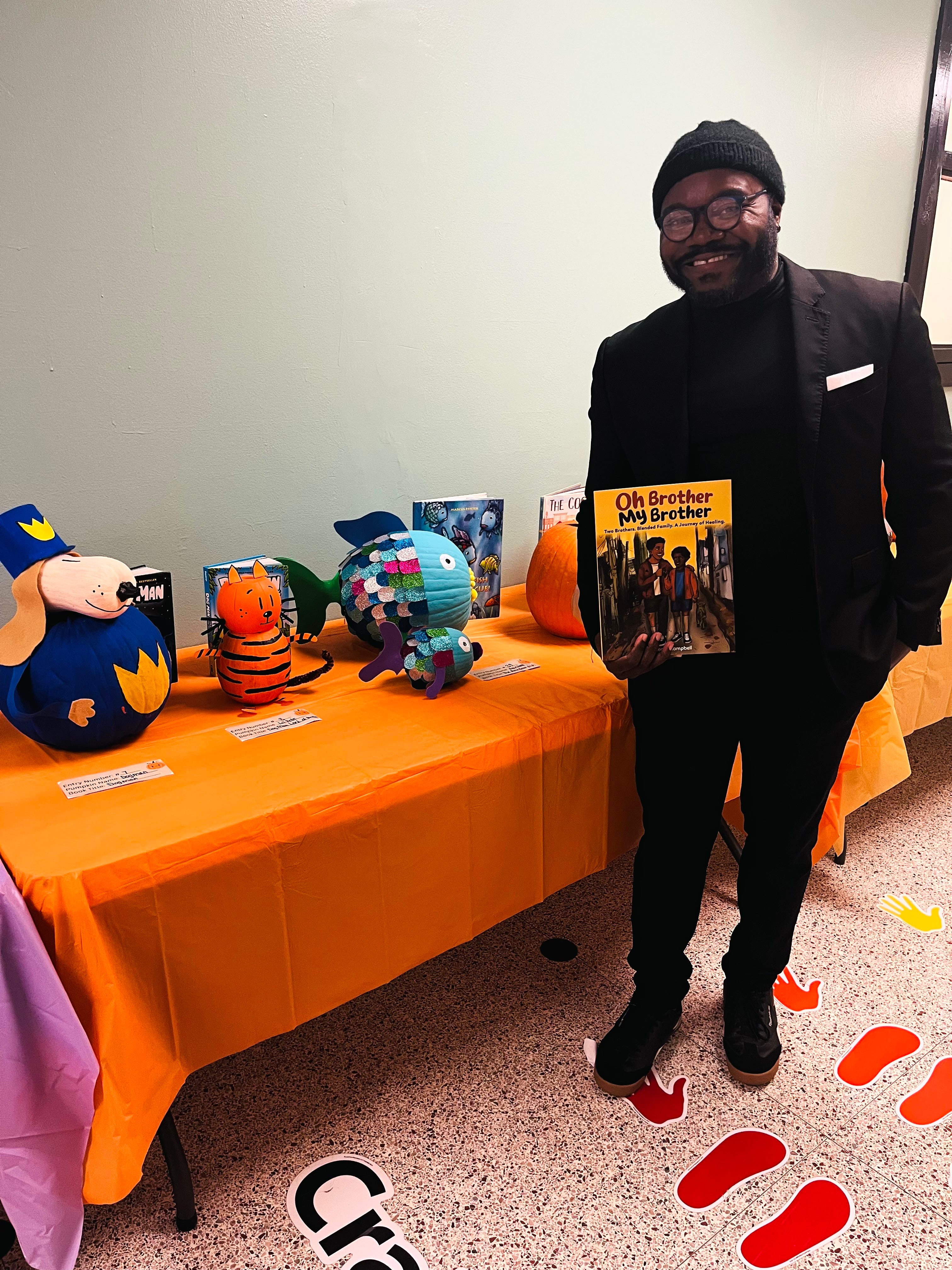
A school pumpkin contest reminded me that books don’t just teach children how to read. They give them permission to imagine, create, express themselves, and discover what’s possible.
I recently had the pleasure of visiting Northside Elementary School in Cabot, Arkansas, to judge its very first Storybook Pumpkin Contest. And honestly, I walked away more inspired than I expected.
The assignment was simple: take a pumpkin and transform it into a character from a favorite book.
But what those students created was anything but ordinary.
From Harry Potter and Cookie Monster to Bluey and Dr. Seuss, the creativity on display was incredible. I was especially impressed by the kindergarten and first-grade students, whose attention to detail and imagination rivaled that of the older children.
As I looked at each entry, I couldn’t help but think about something I wish I had experienced more often as a child: opportunities to express my creativity, explore my interests, and bring the stories I loved to life.
It reminded me of something important.
Reading isn’t just about what children learn from a book. It’s also about what a book inspires them to do.
Give children room to imagine
When children connect with literature, they begin to see possibilities beyond the pages.
A character can inspire a drawing. A story can spark a conversation. An imaginary world can encourage a child to think differently about the world around them.
But that only happens when we give children access to books and the freedom to explore stories that resonate with them.
Not every child will love the same genre, character, or subject. Some will gravitate toward fantasy, while others may enjoy biographies, adventures, or stories about families and friendships.
Our job as parents, educators, and community members isn’t to dictate every story they should enjoy. It’s to help them discover the stories that speak to them.
And sometimes, those stories can help children better understand themselves and the people around them.
Reading can open the door to meaningful conversations
As a children’s book author and mental health and literacy advocate, I believe books can be powerful tools for building more than reading skills.
They can help children explore identity, develop confidence, recognize emotions, and understand relationships.
That’s one of the reasons I wrote Oh Brother, My Brother.
The story follows two half-brothers, Ohmar and Mychael, as they navigate what it means to build a relationship and become family. Beyond the story itself, the book includes thought-provoking questions at the end of each chapter to help parents and children connect through meaningful conversations.
Because sometimes the greatest value of a book isn’t just finishing the last page. It’s what happens when a parent and child sit together and talk about what they’ve read.
Make reading part of your child’s world
The Storybook Pumpkin Contest reminded me that children are full of creativity, curiosity, and potential. They simply need opportunities to explore it.
So here’s a challenge: Don’t just ask your child what they’re reading. Ask what they think about the story. Which character do they connect with? What would they do differently? What did the story make them feel?
Then give them another book to explore.
If you’re looking for a meaningful next step, pick up a copy of my children’s book, Oh Brother, My Brother. It’s an opportunity to bring a story into your home and create space for conversations that matter.
Get your copy at brandondcampbell.com, Amazon, Barnes & Noble, and wherever books are sold.
And if you’re an educator, school administrator, or community organization interested in bringing literacy, creativity, and social-emotional awareness into your programming, I’d love to connect about partnering together.
Let’s give children more than something to read. Let’s give them stories that inspire them to imagine what’s possible.


