


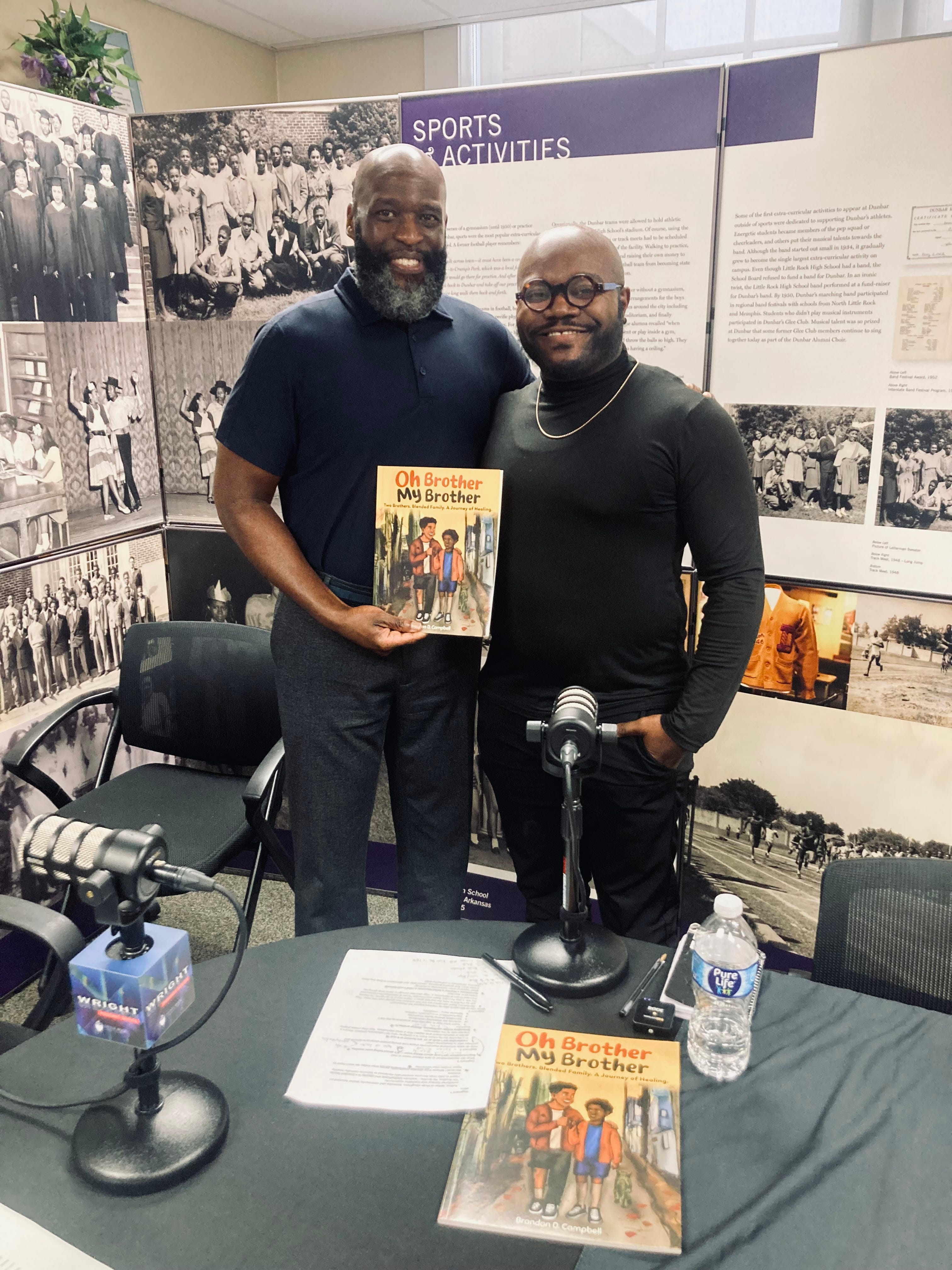
I had the honor of being featured on Talk of Iowa through Iowa Public Radio—returning to the University of Iowa, where I discovered both my talent and my calling. That experience reminded me of something powerful: when you succeed in one place that stretches you, you realize you can succeed anywhere.
But the most meaningful conversation happened on Wright on Education podcast, hosted by Dr. Jermall Wright, the Superintendent of the Little Rock School District.
We talked about leadership. Representation. Emotional wellness. And specifically, what Black boys need in schools today.
Here’s what I said, and what I firmly believe:
If we develop emotionally aware and intelligent boys today, we won’t have to repair broken men tomorrow.
If we raise emotionally available and securely attached boys today, we won’t be trying to fix fractured families later.
If we equip boys with emotional literacy tools now, we won’t have to worry about broken communities in the future.
Yes, I said it on the podcast: we could put the prison business out of business. But it starts at home, and it’s reinforced at school.
Leadership doesn’t suddenly appear at 37 years old.
It begins at six and seven.
Many young boys are carrying trauma, unmet needs, and toxic shame, the quiet belief that they are unworthy or unlovable. When those emotions go unnamed and unaddressed, they show up in behavior, disconnection, and sometimes destructive outcomes.
That’s why storytelling matters.
Books. Representation. Characters who reflect their lived experiences. Stories that help them feel seen and heard.
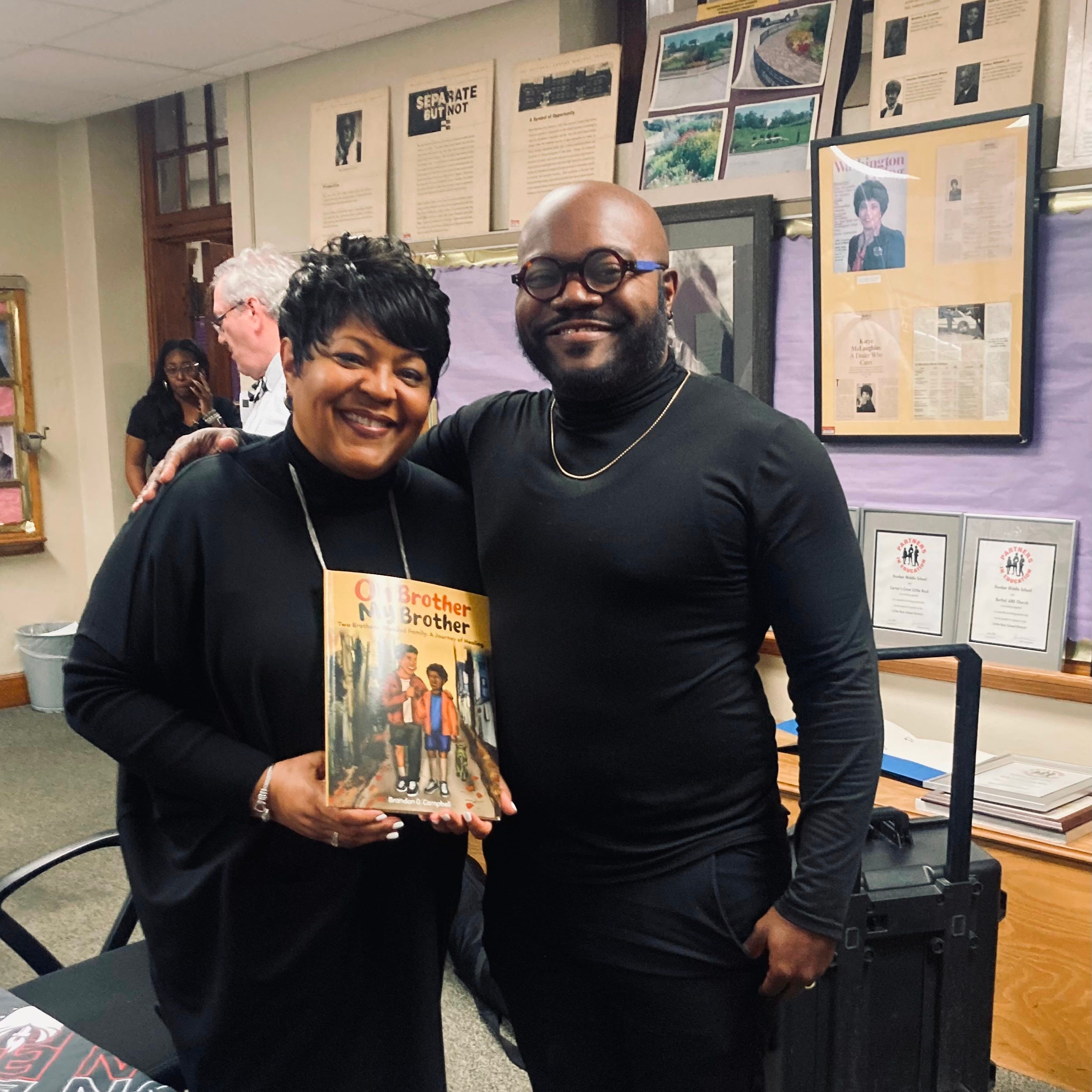
This is also why I introduced the concept of micro-mentoring during the conversation. Not everyone has time for traditional one-on-one mentorship. However, we can merge passion with presence through school visits, book readings, pop-ups, and group discussions, impacting dozens of young people at once.
When I read Oh Brother, My Brother in schools, I’m not just sharing a story. I’m introducing authorship, entrepreneurship, economic development, and healthy masculinity. I’m modeling the possibility.
Because healing doesn’t just happen in therapy offices.
It happens in classrooms.
At kitchen tables.
In libraries.
Through honest conversations.
Strong families build strong leaders.
Strong leaders build strong communities.
And it all starts with the boy.
If you believe in raising emotionally secure, confident, and compassionate young leaders, I invite you to join the movement.
Let’s do the preventative work now
Buy Oh Brother, My Brother anywhere books are sold.
Write a review on Amazon.
Book me for your next engagement.
Join me at the Black History Book Fest on Feb. 21st
I will be reading “Oh Brother, My Brother” and leading a discussion with families.

Click here to register.


